Layered Sympathy and Get Well Cards

Layered Sympathy and Get Well Cards

wwwDSC_8552

Recently, I was in Michaels and saw some patterned paper on clearance for $0.19 a sheet.  I decided to buy several sheets of the same pattern and started “playing” with it when I got home.  Scraps started piling up on my desk which led to a bunch of different card layouts.  Fun, fun, fun!!

The beautiful patterned paper used for all these cards was called “Floral Palette” by Recollections.  So much going on with this pattern; so many possibilities!

10505805

First, I focused on the soft colors from the upper right corner of the paper.  The soft tones seemed perfect for a sympathy card.  There is also a small section in the middle of the left edge that I thought worked well.

wDSC_8543

wDSC_8547  wDSC_8550

      (The top sample above is a 5 x 7 inch card, and the bottom two are 5 1/2 x 4 1/4 inches.)

*

For this last card, I used a portion of the paper to make a simple card front.  I added a double mat and greeting, and it was done!  Doesn’t get much easier than that!!

wDSC_8546

I still have a bunch of scraps left over.  Hmmm…..


To see the supplies used, click here… Continue reading

Embossed Birds Sympathy Card

Embossed Birds Sympathy Card

wDSC_9989.jpg

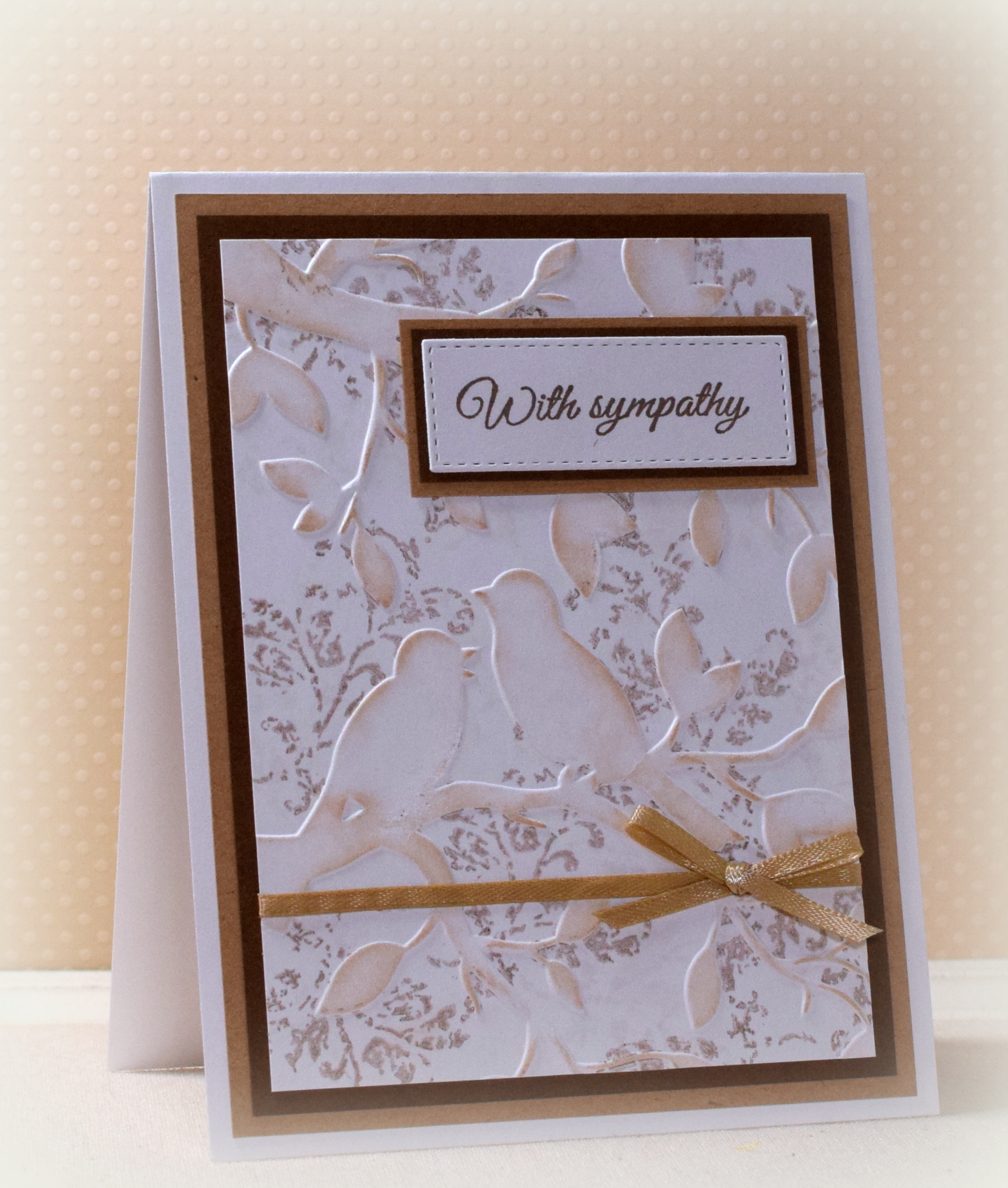
This card features the “Birds in Branches” embossing folder by Darice and a stamp from the “Timeless Textures” set by Stampin’ Up.

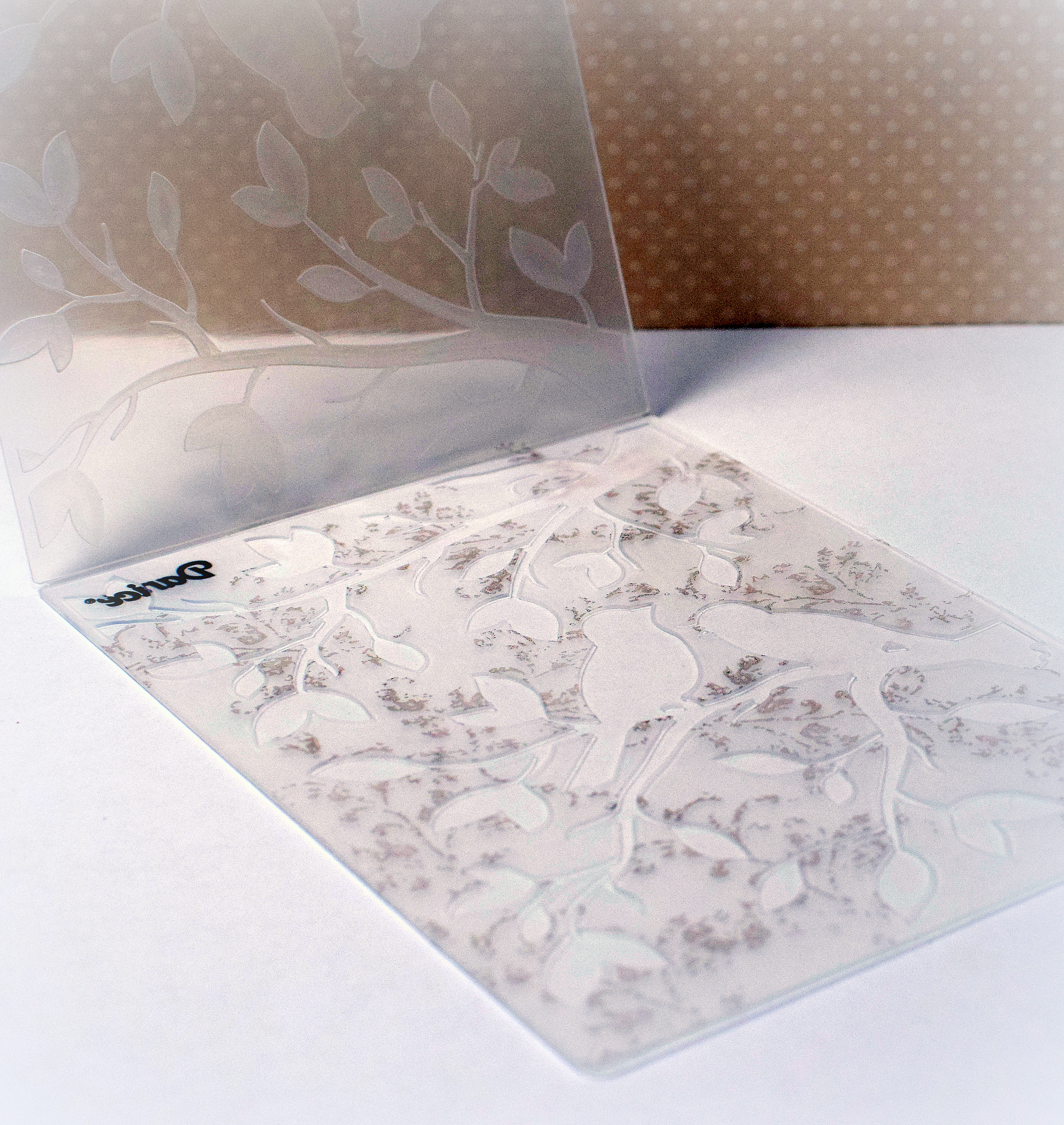
In order to make the stamped pattern appear behind the embossed birds and branches, you stamp the pattern onto the inside of the embossing folder before embossing.  Embossing folders with larger, solid portions (as opposed to thin lines/patterns) work best for this technique.  Open the embossing folder and stamp your image on the “front” side of the folder (with the indented images that will be embossed).  You want the ink/stamped images to go only on the flat part of the folder; avoid getting ink inside the “indented” birds and branches.  (In other words, press/stamp lightly; do not press so hard on your stamp that it squishes into the indented portions of the folder.)  You can use a large background stamp to ink up the folder or repeatedly stamp a smaller image (like I did here).  Keep in mind that whatever you stamp will transfer as a mirror image so text, music notes, etc. will appear backwards with this technique.

wDSC_9990

Once the embossing folder is inked up, carefully place your card stock inside the folder (position paper on clean side and then close folder to avoid smudging stamped images), and run it through your die cutting machine as you normally would.  (You may want to use a card stock shim and run it through a few times to make sure all the ink transfers to the card stock.)    And don’t forget to wash your embossing folder when done in case there is any ink left behind!

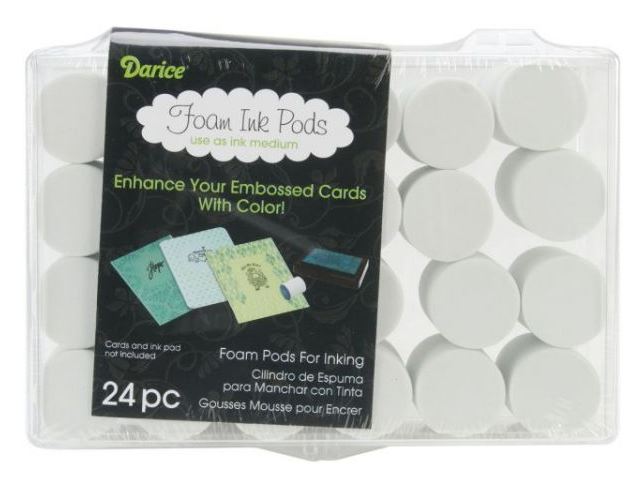
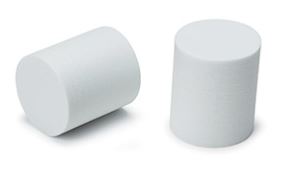
After I embossed my panel, I lightly rubbed over the raised portions with ink and a Darice Foam Ink Pod.  Because these pods are kind of hard/firm (unlike a sponge), I find it easier to keep the ink only on the raised surfaces and not in the “nooks and crannies” around the embossed parts.  (These pods can be washed with soap and water and reused.)

foam pods 2    foam pods 1

The embossing folder does all the work on this card!  I simply added some mats, a greeting stamped on a stitched rectangle die cut, and a ribbon embellishment to finish it off.

Thanks for checking out my card project!

This content uses referral links as described in the disclosure policy on my sidebar.

Easel Card with Negative Framed Scene

Easel Card with Negative Framed Scene

wwDSC_9937.jpg

For this card I used the negative of a “happy” die cut (the part left after the die cut is removed from the card stock) and a printed scene behind it.  I embossed the frame around the “scene” and the stamped greeting with a wafer thin stitched rectangle die using my Cuttlebug and a Spellbinders embossing mat.  (The “sandwich” I use for embossing with a thin die is A-plate, B-plate, embossing mat, card stock, die with cutting edge facing paper and embossing mat, B-plate, and a chipboard shim.)

I created a few more designs with different scenes, greeting stamps, and color combinations.

wwDSC_9939   wDSC_9931

For this final sample, I did not emboss the panel with the rectangle die.  Instead, I sprayed speckles of ink onto the card front using a Tim Holtz marker spritzer tool and a Vintage Photo distress marker.

wwDSC_9954

To create the easel card base, I started with a piece of card stock measuring 6 1/4 inches by 10 inches and scored it at 5 inches and 2 1/2 inches.  (I chose these measurements because they worked with the dies and stamps I was using.  You basically just need to fold your card base in half and the front in half again.)  The separate panel you decorate for the card front should be the same size as the folded card base; in my case it was 6 1/4 inches by 5 inches.  After folding the card base in half, fold the front of the card base up along the 2 1/2 inch score line (like a “z”), and adhere your decorated card front panel to the half portion showing.  (If you unfold the front of the card base after adhering the decorated panel, the decorated panel should flip to the inside of the card.)  Stamp a greeting on a separate panel.  Adhere the greeting panel to the inside of the card base with foam tape.  (It needs to be raised up slightly; this piece will hold the “easel” card front when opened.)  Your raised greeting panel will be hidden inside the card when the card is “closed” and only the decorated card front is showing.

The “happy” die is called “In a Word: Happy Cutaway” by Winnie & Walter .  The scenes I used behind the “happy” negatives were google images.  Photos and patterned paper would work also.

This card folds flat for mailing.

wDSC_9943

Thanks for checking out my card projects!

This content uses referral links as described in the disclosure policy on my sidebar.

In-Home Card Making Workshop

In-Home Card Making Workshop

vDSC_9635.jpg

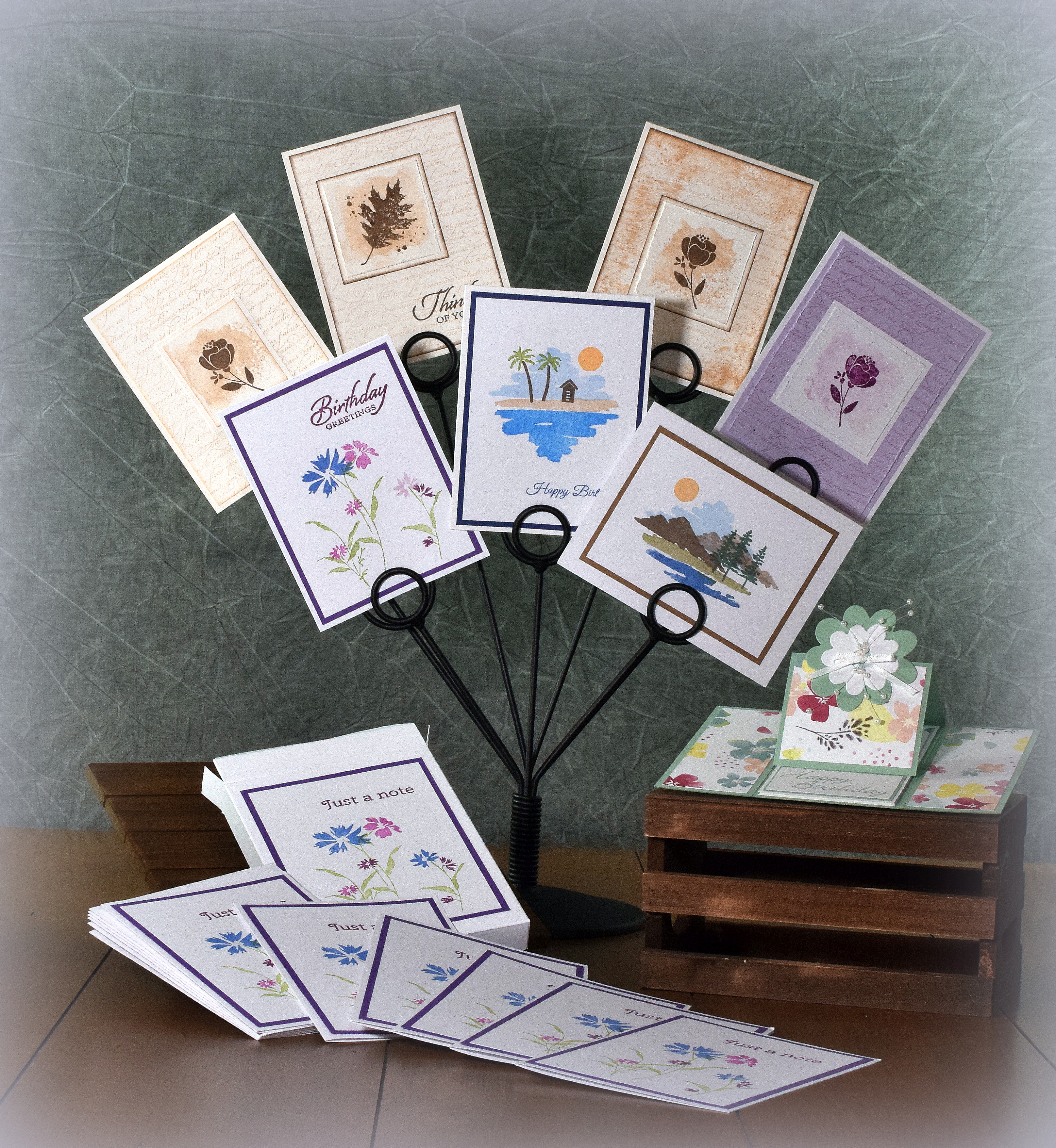
In my last post, I mentioned that I had a friend who wanted to give card making a try.  (HERE is the project we worked on together.)  I guess she really enjoyed it because she called me a few days later and asked if I would design and teach a 2-hour card making workshop she wanted to host at her house with a few of her friends.  The photo above, with the project choices, was included on the evite she sent.  I was thrilled to do it and really grateful for the opportunity.  Thanks, Cyndy!

***

wDSC_9583

I came up with three different projects; we had time for two of them.  The photo above shows one of the lessons the ladies chose which included stamping with a large background stamp, using a stamp positioning tool, water color block stamping, and various distressing techniques.  It was fun to see how the ladies made changes to my original design to make it their own!

***

The other project we completed was a “fancy fold” card I had made a while back (HERE).  The focus on this lesson was using a trimmer and score board (which they hadn’t done before).

***

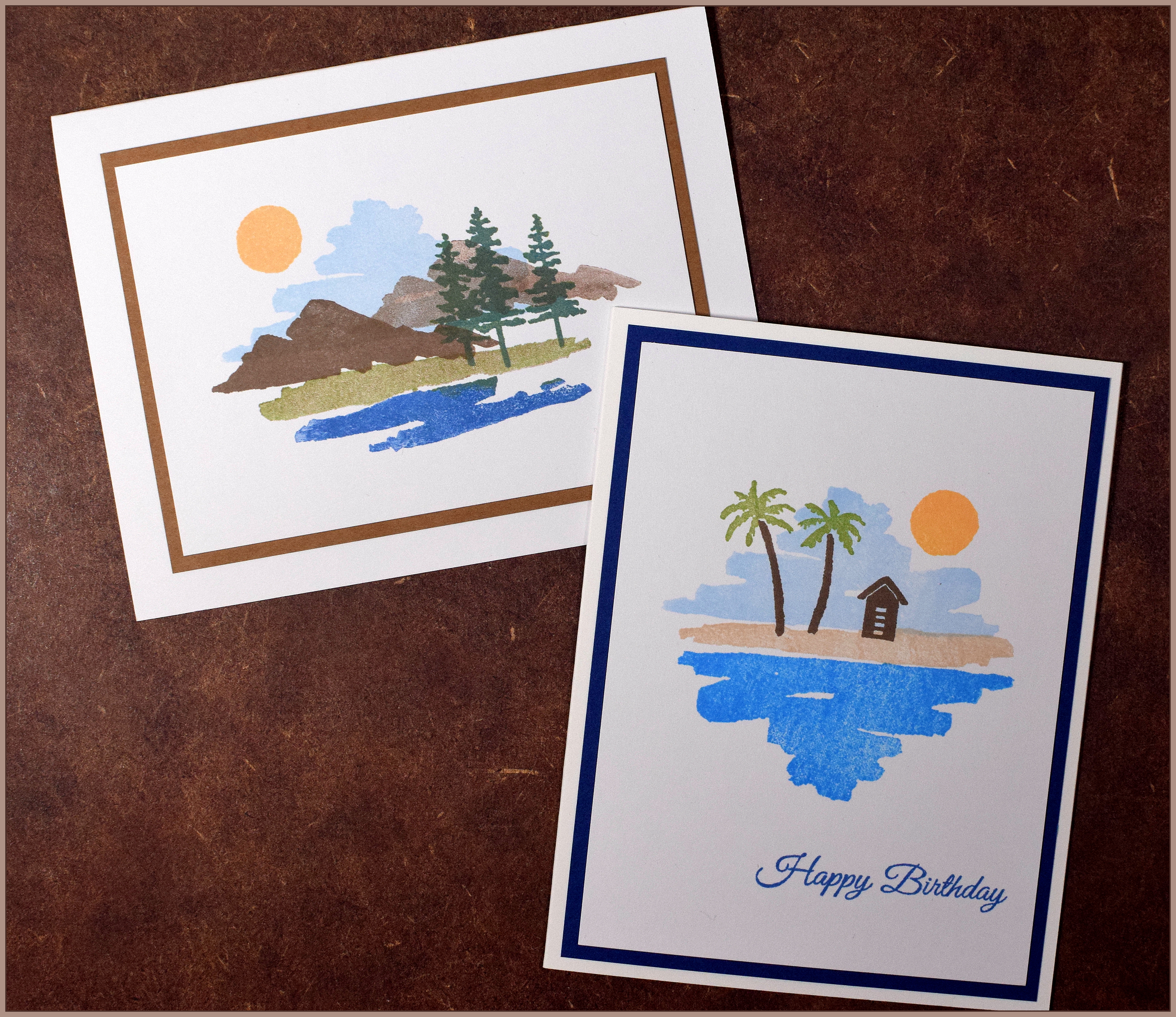
The final project I came up with was to make a boxed set of note cards using a few solid image, scene-building stamp sets.  (I was trying to avoid the need to color since time was limited.)  Unfortunately, we did not have time for this one.  Maybe next time…

wDSC_9615  xxDSC_9612

Thanks for checking out my post!

Jar of Blooms for Mother’s Day

Jar of Blooms for Mother’s Day

wDSC_9947

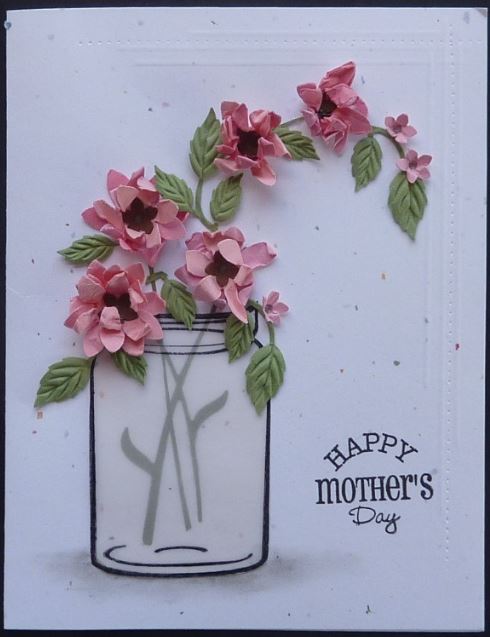
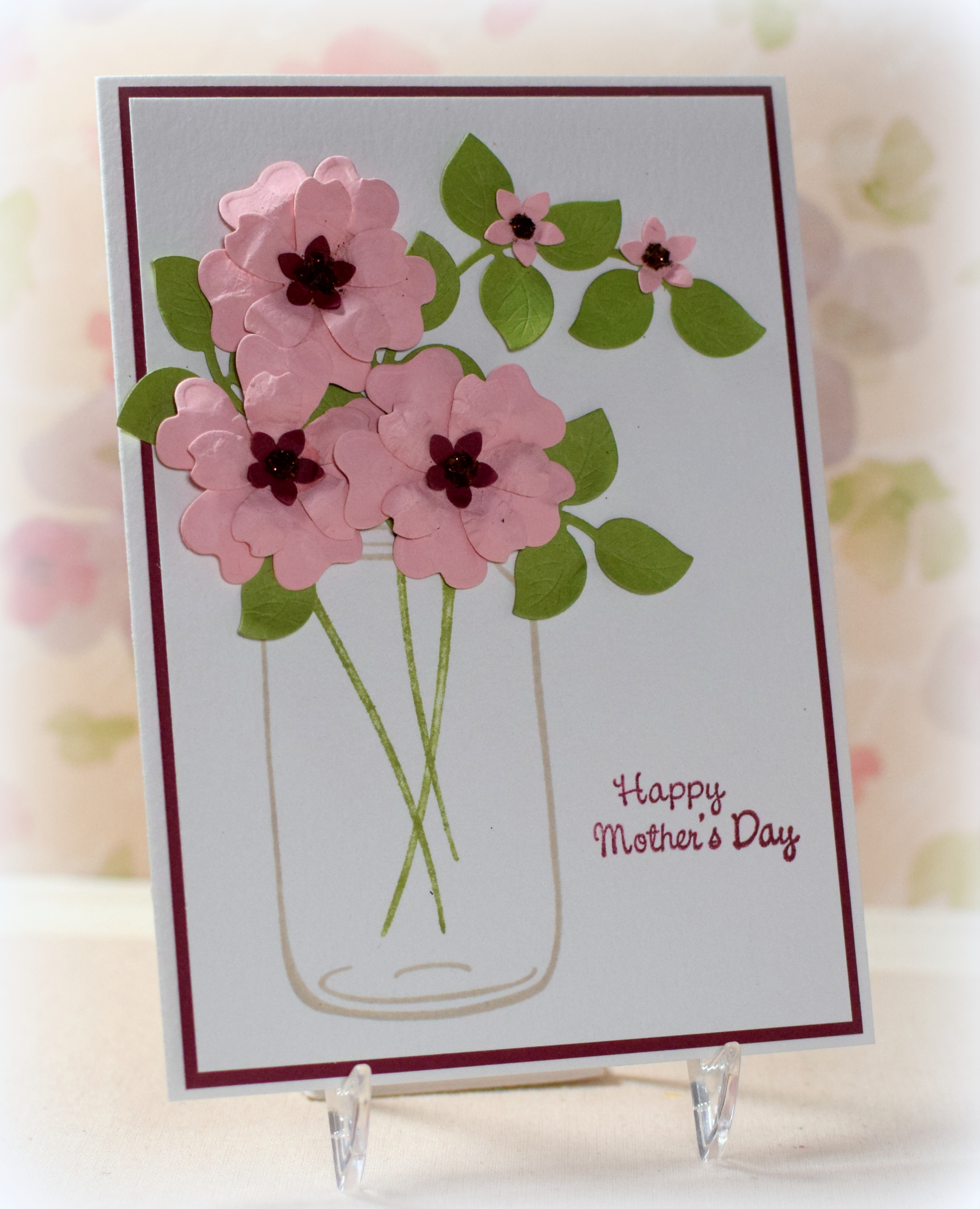
(My card is a CASE inspired by the card shown below.)

(This card is one I made back in the spring and am just getting around to posting now…)

As I mentioned in my “Fun Daisies” post, a friend of mine wanted to give card making a try and found a few cards online that she thought she’d like to CASE.  (This was the second sample she found.)  Since I was able to find supplies that closely matched the ones used, I copied the original design pretty closely to make my “class” sample.

Here is the original card :

P1040346_by_Mrs_Noofy

(This card was created by Mrs. Noofy and was posted on Splitcoaststampers, March 18. 2016)

Like in the original, I stamped the mason jar on vellum with and cut it out with scissors.  The jar is from the “Mason Jars” set by Inkadinkado, was stamped with Memento Tuxedo Black ink, and adhered with mini glue dots.

Score lines and faux stitching were made with my mini scoring board, a bone folder, and a dressmaker’s tracing wheel.

The flower pieces were made with a punch, and before the layers were glued together, I sprayed them with water, shaped them with my Heartfelt Creations Flower Shaping Tool Set, scrunched them up, and let them dry.  The punch I used for the larger flowers was the EK Success Hydrangea Confetti Punch.  The smaller flowers were made with the Fiskars Flower Lever Punch (small).  A sprinkle of Redland Elements was added to the centers.

I loved the leaves used on the original card but was unable to get the punch set in time for our lesson, so I used the leaves from the Spellbinders D-Lites Flowers and Stem die set instead.

The stems were from the “Tranquil Tulips” stamp set by Stampin’ Up (retired?) and were stamped with Gina K Grass Green ink before the vellum jar was added.

The greeting is from the “Happy Mother’s Day” stamp set by Studio G and Papertrey Ink Scarlet Jewel ink.

I used Gina K Innocent Pink, White, and Grass Green card stock and Papertrey Ink Scarlet Jewel for the mat.

Here is another sample (5 x 7 inch) with flowers made from the  Spellbinder D-Lites Blooms Three  set.  (I shaped the petals but did not scrunch them up on this card.)  I also stamped the larger jar image directly onto the card panel using  Papertrey Ink Soft Stone ink.  Water color paper was used for the focal panel and card base.

wDSC_9950

Thanks for checking out my card projects!

This content uses referral links as described in the disclosure policy on my sidebar.